
Imports too jumped by 51.5 per cent to $40.4 billion in July against $26.6 billion in the same period last year, leaving a trade deficit of $11 billion, the Commerce Ministry said on Thursday.

Will come out with a response on the issue shortly.

Key to Modi's plan will be the interest rates offered for gold deposits.
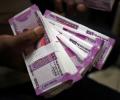
Ongoing trade-war rhetoric between the US and China added some nervousness on the trading front coupled with extremely bullish dollar sentiment overseas.
.jpg)
The trade deficit stood at $6.54 billion in February this year.

In his opening remarks at the G20 Leaders' Summit at the Bharat Mandapam in New Delhi, Modi said the 21st century is a time of giving new direction to the world.
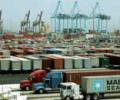
Imports too contracted during the month by 7.61 per cent to $37.9 billion.

The value of oil imports decreased by 37.5%.

Import growth moderated to a four-month low, owing to sharp decline in that of gold.

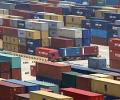
Global buyers are putting pressure on exporters to offer discounts between 10 per cent and 15 per cent.

Imports, however, were higher at $350.69 billion, despite growing at a lower pace of 21.6 per cent amid increasing crude oil prices.

Sentiment turned weak after data released after market hours on Monday showed that the country's trade deficit, or difference between imports and exports, reached USD 14.88 billion in December, up about 41 per cent year-on-year, as crude oil and gold import bill inflated.

The Parliamentary Standing Committee on Commerce has observed that a massive shortfall in the budgetary allocation of over Rs 1,900 crore by the finance ministry to the industry department may have an adverse impact on the implementation of infrastructure (infra) projects in 2022-23 (FY23). While the Department for Promotion of Industry and Internal Trade (DPIIT) had sought Rs 10,267 crore from the finance ministry for FY23, it received Rs 8,348-crore allocation. For the National Industrial Corridor Development & Implementation Trust (NICDIT), the finance ministry has allocated Rs 1,500 crore instead of Rs 2,400 crore demanded for the project.

Continuing the growth momentum of 2005-06 in the current fiscal, India's exports increased 27 per cent in April 2006-07 to touch $8.346 billion.

Exports rise 36.4 per cent year-on-year, the highest in the past 33-months, to $22.5 billion in December 2010
India's exports, for the first time, crossed the $51 billion-mark in 2002-03, increasing the possibility of achieving the one per cent share of the world trade much ahead of the targeted year 2007.

India Inc's net profit as a percentage of the country's gross domestic product (GDP) is just shy of reaching 5 per cent, bolstered by strong earnings growth in the second quarter of 2023-24. Analysts interpret this as an indication that a corporate profit upcycle is in progress, with projections suggesting that this share could exceed 8 per cent within the next five years, driven by bullish earnings growth expectations. "We believe we are only halfway through a profit cycle, with the profit share in GDP rising from a low of 2 per cent in 2020 to about 5 per cent currently, and likely heading to 8 per cent in the coming four to five years. "This implies about 20 per cent compounding of earnings growth. "Underscoring this forecast is the start of a new private capex cycle, under-geared balance sheets, a healthy banking system, lower corporate tax rates, improving terms of trade, and structural consumption demand outlook albeit somewhat offset by likely consolidation in government deficit," said Ridham Desai, managing director, head of research, Morgan Stanley India in a note.
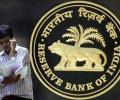
The Reserve Bank has told the International Monetary Fund (IMF) that the objective of frequent interventions in the forex market is to curb excessive volatility, dismissing the Fund's rationale for reclassifying India's exchange rate regime. The IMF, following the Article IV consultation with the Indian authorities, reclassified the status of the exchange rate regime to "stabilised arrangement" from "floating" for period between December 2022 to October 2023. India's Executive Director at IMF K V Subramanian and Senior Advisors Sanjay Kumar Hansda and Anand Singh questioned the selection period adopted by the Fund for analysis and also reclassification of the country's exchange rate regime.

Imports during the period grew by 6.8 per cent to $27.68 billion, leaving a trade deficit of $9.72 billion, according to a Commerce Ministry data released in New Delhi on Wednesday.
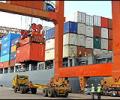
Imports were up by 19.8 per cent year-on-year to $37.7 billion in the month.
The regulatory framework for manufacturing equipment needs to change, says Sanjeev Nayyar.
The growth rate has been the lowest since October, 2009, when it contracted by 6.6 per cent.


India and China on Tuesday discussed the recent spate of incursions and ways to maintain peace and tranquility along the Line of Actual Control in the border areas.

In a recent note, the global brokerage firm said India now commands a weight of 19 per cent in the above-mentioned portfolio as compared to 18.2 per cent in September 2023. India, it said, is a large liquid market and remains a counter-weight to North Asia if a slowdown in the West occurs and China's recovery disappoints.
Driven by a surge in remittances by expatriates and software exports, India's balance of payments saw a surplus of $1.90 billion on current account for the first quarter ending June 2004 as against a deficit of $637 million

In August 2014, imports stood at $ 2.06 billion. Higher imports will have adverse bearing on India's current account deficit (CAD).
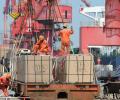
Trade deficit during the month narrowed to USD 14.54 billion from USD 15.3 billion in January 2020. It was USD 15.44 billion in December 2020.

India has a huge trade surplus with US - over $20 billion a year in the past five years.

India's exports remained in the negative territory for the 11th month in a row.

'Trump's anti-trade, anti-immigrant rhetoric reminds me of Chinese history,' says A V Rajawade.

It will strengthen, because global economic conditions require the eurozone to run trade deficits.

Pakistan's current account deficit (CAD) increased to a 4-year high of $17.4 billion in the fiscal year of 2021-22, indicating more troubles for the ailing economy of the cash-strapped country. The State Bank of Pakistan (SBP) on Wednesday reported that the country recorded a CAD of $17.406 billion in FY22 compared to a gap of just $2.82 billion in FY21. According to Dawn newspaper, the massive CAD speaks a lot about the severe problem of the balance of payments.

Rajan says, this is a time where countries should be focusing on getting the macro stability in order

The recently released RBI First Quarter Review of Monetary Policy 2009-10 and the accompanying 'Macroeconomic and Monetary Developments First quarter review 2009-10 have indicated that on the basis of Balance of Payments (BoP) the export growth for 08-09 has declined by over 22% to 5.4% and also the import growth has declined by over 21% during the same period.

India's rupee is likely to remain under pressure due to high prices of crude oil and other commodities, and may stabilise at around 79-80 against the US dollar in the near term, say experts amid limited headroom available with the Reserve Bank to check the weakening of the domestic currency. The currency has slumped over 5 per cent this year after Russia's invasion of Ukraine sent international crude oil prices soaring to a decade high. On Monday, rupee ended at a fresh all-time low of 78.34 (provisional) against the US dollar.

Exports dropped to $12.81 billion in June from $17.73 billion in the same month last year, according to the government data released on Monday. Imports too dipped for the sixth straight month by 29.3 per cent to $18.97 billion in June over the year-ago month.
India's exports declined by 29.2 per cent in May -- contracting for the eighth month in a row -- over the same month last year as overseas shipments hit by the slowdown in major global markets like the US and Europe.
